

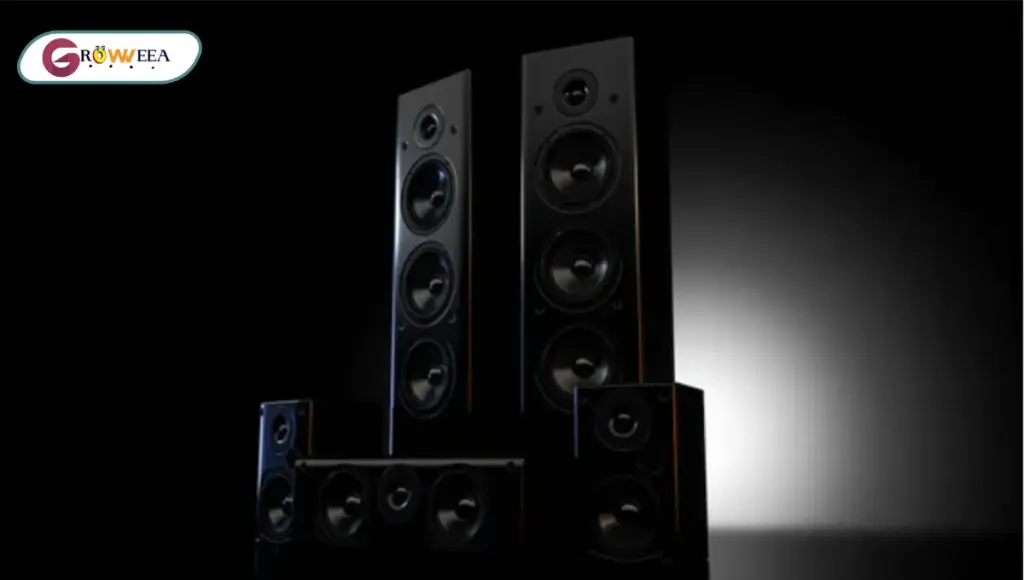
Sound has always played a vital role in human life, serving as a medium through which emotions, stories, and music transcend everyday experiences. At the centre of modern audio reproduction lies the loudspeaker, an invention that has transformed the way we experience sound. Since its origins in the late 19th century, the loudspeaker has continually evolved, blending technological innovation with the art of acoustics to deliver sound with remarkable clarity and depth.
Table of contents [Show]
Early Beginnings and Pioneering Innovations
The story of the loudspeaker begins in the 1800s, when inventors explored ways to convert electrical signals into audible sound. Early developments included the telephone receiver, created by Johann Philipp Reis in the 1860s. However, it was Alexander Graham Bell’s telephone in 1876 that introduced a design resembling modern speakers to the public.
The first true loudspeakers capable of reproducing a broad range of frequencies were developed by pioneers like Oliver Lodge and Nikola Tesla at the turn of the century. A significant breakthrough came in 1925 when Edward Kellogg and Chester Rice patented the moving-coil loudspeaker. Their design used a diaphragm and voice coil within a magnetic field to convert electrical signals directly into sound. This principle remains the foundation of nearly all contemporary loudspeakers.
Technological Advancements in Loudspeaker Design
The moving-coil concept has proven remarkably resilient, but decades of innovation have significantly enhanced speaker performance. Refinements in materials, electronics, and acoustic engineering have all contributed to the evolution of sound quality.
Materials and Construction
A key factor in loudspeaker development has been the advancement of materials. Early diaphragms were made of paper, but today they incorporate lightweight composites, metals, and polymers such as Mylar and Kevlar. These materials improve both durability and sound clarity. Advances in magnetic materials have also enabled the use of smaller, more powerful magnets, reducing distortion and increasing efficiency.
Electronic Integration
Electronic innovation has further transformed loudspeaker capabilities. The invention of the transistor allowed for more powerful and efficient audio amplification, enabling speakers to handle higher sound pressure levels without distortion. Modern speakers often include digital signal processing (DSP), which can adjust frequency response and compensate for room acoustics in real-time, resulting in a more accurate and immersive listening experience.
Varieties of Loudspeakers
Different applications and listening environments have led to the development of diverse loudspeaker types. Each design caters to specific audio needs, from home entertainment to professional sound systems.
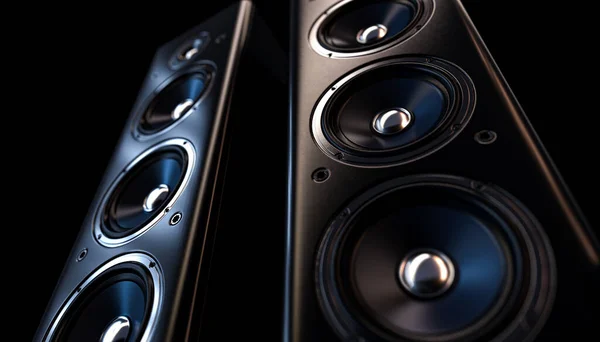
Full-range speakers aim to cover the entire audible frequency spectrum with a single driver, offering simplicity and cost-effectiveness for smaller setups. Multi-way speakers, however, separate audio signals across multiple drivers, woofers, tweeters, and mid-range units, allowing each component to handle specific frequencies. This separation delivers more precise sound reproduction, ideal for home theatre systems and professional audio environments.
Speaker enclosure design also influences performance. Acoustic suspension enclosures are airtight, using the air inside to control woofer movement, resulting in tight, controlled bass. Bass reflex designs, on the other hand, use ports or vents that resonate with the driver’s rear wave, producing a fuller low-frequency response.
Loudspeakers in the Digital Era
The digital revolution has reshaped how people interact with loudspeakers, making them more versatile and convenient.
Wireless technologies such as Bluetooth and Wi-Fi have allowed speakers to operate without cumbersome cables, while smart speakers integrate voice-activated assistants, transforming them into central hubs for smart home control. High-resolution audio formats have also driven demand for speakers capable of reproducing subtle details and wider frequency ranges, satisfying audiophiles seeking a more immersive listening experience.
Acoustic Engineering and Future Prospects
The science of loudspeaker design continues to advance, guided by research in acoustics, psychoacoustics and material science. Emerging technologies in virtual and augmented reality are increasing the demand for speakers capable of creating spatially accurate soundscapes.
Future innovations may include the use of graphene in diaphragms, a material with exceptional strength and electrical conductivity, enabling even more efficient and responsive speakers. Advances in signal processing, amplification, and quantum computing could further elevate sound reproduction quality, setting new standards for audio fidelity.
Conclusion
From its early experiments in converting electricity into sound to today’s sophisticated, digitally integrated designs, the loudspeaker has transformed how we experience music, entertainment, and communication. It remains a cornerstone of modern audio, combining engineering ingenuity with artistic expression. As technology continues to evolve, the loudspeaker is poised to deliver even richer, more immersive soundscapes, reinforcing its enduring role in human auditory culture.